
EU07 GAMES
Social Practices of Architecture and their Political Dimension
2014-2015
Tutor: Socrates Stratis
The Shape Of Nicosia Night Law: for night urbanities, (homage to Lucius Burkhardt)
The aim of the EU 07 Game is to comment, or criticize, or subvert, or resist to the existing status quo of the invisible design of the Nicosian night. It is an urban game that encourages a night urbanity by firstly mapping night mobility, the tensions and conflicts between the actors of the night as well as lack of regulations.
The EU 07 Game supports the change of the actual status quo of the invisible design of the night by encouraging a form of night urbanity. Such change takes place by designing gameful tactics based on: actors, regulations, tactics and strategies, means of communication in specific night urban environments. Each version of the EU 07 Game (there are four of them) proposes possible roles of hybrid architectural and visual arts practices based on the logic of the “organic intellectual”.
The forms of the four versions of the EU 07 Games are table games as well as events in the city and they combine both digital and analogic technology. Their budget is low enough to be undertaken by the students’ teams.



Urban Chess
Team: Sossanna Anaxagorou , Farzane Kohari, Athina Nicolaou, Giorgos Syranides
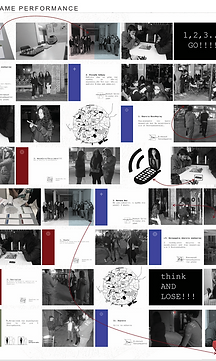
The aim of the “Urban Chess” Game is to both reveal insecurities of pedestrians while walking during nighttime in the center of Nicosia, and to show ways to cope up with them. Such insecurities may arise due to the presence of the buffer zone, to poorly lit areas, due to lack of urban activities or even due to the presence of unfamiliar ones to the pedestrians. The game has two interrelated parts: the table chess part in an interior space (Ground Floor of the Department of Architecture, University of Cyprus) and the navigation part through the streets of the city interacting with night activities. Each of the two teams that play the game, assign an ambassador to play the chess where the rest of the group begins wandering in the city based on a series of challenge cards. The navigation areas for the game are based on a mapping of the city done by the Game Design Team, where the night rhythms are documented and the information enriches the challenge cards. The destinations are located across the divide encouraging the players to cross over. The challenge cards are grouped by their degree of difficulty, (easy, medium, and hard). By achieving the challenges the on-going chess game is “disturbed” through a continuous feed-back by mobile phone that takes place between the teammates and their ambassador chess player: gaining or losing a movement on the chessboard, gaining or losing a pion, or even playing the opponent’s piece when her/his teammates achieve a “hard” challenge). In other words, the interaction with the night urban activities becomes an external agent of disruption of the chess session. The game ends when one of the two chess players wins in a predesignated number of sessions. By that time, the players hopefully, got the chance to become more acquainted with night activities they don’t normally come in contact with in their everyday life.


Catch Me If You Can
Team: Barbara Bazile, Ana Echeveria
The aim of the game is to contribute in the elimination of the disparity between the two segregated parts of Nicosia by working on the crossing practices of the borderline. The game comments on the reality of the night in both sides of the city regarding its “invisible workers”. “Catch Me If You Can” invites the players to “catch” a series of night workers (bar tenders, guards, streetcleaners), by “selfies” with their mobiles. The two teams in the game are given a list of “invisible workers” and a map of Nicosia by the game organizers and they are asked to “catch” them as soon as they can in the given order. Every time a team “catches an “invisible worker” with a selfie, it needs to upload it to a website from the two game centres located in predesignated area in reciprocal spots across the border. The winner is the team who uploads first all the selfies. Meanwhile, both the teams would have crossed the border dozens of times, giving a headache to the border controllers…


Flexible Flaws
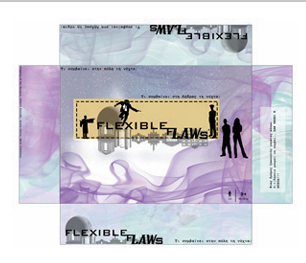
The aim of the game is to make apparent, to the game users, the grey zones between reclaiming (for collective interest) vs appropriating practices (for individual interest) along a pedestrian road in old Nicosia, during nighttime. Such ambiguity derives from the flexible character of management of public space by the City and the State that allows extensive domination of the public space by private activities from the nearby restaurants and shops. “FlexibleFlaws” is based on the documentation of the night activities along Ledra street in Nicosia. The Game’s references are “Monopoly” game and its ownership concept as well as that of “Palermo” and its Role Playing concept (roles of: policeman, "baron", citizen and District Officer). Βy throwing a dice, all players have equal chances of occupying the thresholds between private ownerships and the road. By choosing cards they navigate between Reclaiming and Appropriating actions, profiting from the gaps of the actual law enforcement as depicted in the game.
Team: Zoi Georgiou, Orestis Pavlides, Aristi Pavlou, Maria Sofokleous


VigiLAWntes
Team: Maria Ioannou, Chrysavgi Constanti, Philippos Michael, Panagiotis Savva
The aim of the game is make its users aware of the on-going crimes and the fact that, in the case of Cyprus, they are not directly linked to the poorness of public space quality, such as remoteness and darkness. VigiLAWntes is a strategy board game based on finding about urban night criminal activities around two rather busy bakeries in Nicosia that become major afterhours attractors. The game content is based on the conditioning of public space through the nocturnal criminal activities. VigiLAWntes offers an archive of criminal activities (cylaw.org), grouped in three categories according to their severity. The game’s references are strategy table games such as “Risk” and “Go”. The game is played by 2 to 4 players who choose cards regarding their movement on the table board. They become a sort of “vigilante” who has to move to the crime scenes in a strategic manner to keep out the rest of the players.


